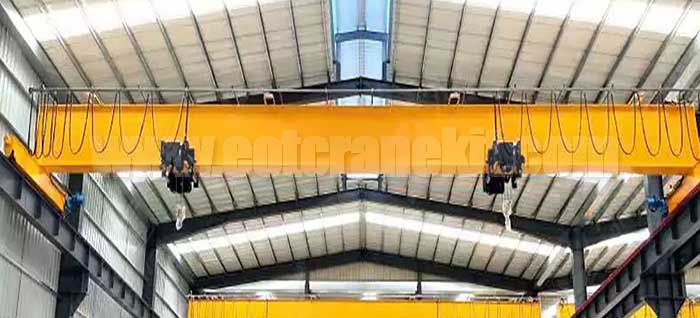
Heavy Lifts with 10–30 Ton Multi-Overhead Crane Solutions
menu_open
Content Quick Link
Heavy Lifts with Perfect Coordination: Multi-Overhead Crane 10–30 Ton Solutions
Introduction
Lifting long and heavy loads comes with real challenges. When beams, shafts, or structural components exceed what a single crane can handle, risks multiply. Loads can sag, twist, or place uneven stress on both the crane and the structure. Even minor misalignment can slow down production or damage materials.
In shipbuilding and industrial assembly, these situations are common. Long beams for hull construction or large structural frames in factories often stretch over 20 meters and weigh multiple tons. Precision is not optional—it’s essential. A single mistake during placement can lead to costly adjustments, downtime, or safety hazards.
This is where multi-overhead crane solutions make a difference. Using two synchronized bridge cranes to lift the same load provides a practical, controlled approach:
- Even weight distribution: Each crane supports its share, reducing bending or twisting.
- Higher safety margins: Operators and materials are better protected from accidents.
- Accurate positioning: Long components can be aligned precisely in place.
- Ability to lift heavier or longer loads: Tasks that are impossible with a single crane become manageable.
In short, multi-crane systems turn complex lifts into predictable, controlled operations. For industries dealing with oversized components, understanding this approach is the first step toward safer, more efficient heavy-lifting workflows.
Multi-Overhead Crane Lifts
Multi-overhead crane lifts involve using two or more bridge cranes in sync to lift and move a single heavy or oversized load. Instead of relying on one crane, the load is shared between cranes, which allows operators to handle items that are too long, too heavy, or awkwardly shaped for a single crane to manage safely.
This method is common in shipbuilding, steel fabrication, and industrial assembly, where beams, girders, or equipment components often exceed the limits of a single crane. The key idea is synchronization: each crane must move at the same speed and direction so the load remains stable throughout the lift.
Practical details buyers and operators should know:
- Load capacity: Typically, each crane in a multi-crane setup can handle between 10 and 30 tons, depending on the equipment. The combined capacity allows heavier lifts while staying within safe operating limits.
- Even weight distribution: By coordinating two cranes, the load is shared evenly. This prevents sagging in the middle of long beams, twisting of the material, and excessive stress on crane components.
- Versatility: Multi-crane lifts can manage long, straight beams, irregularly shaped machinery, or assembled structures that are difficult to balance with a single crane.
- Safety advantage: Fewer surprises during lifting, less risk of dropping or damaging the load, and reduced strain on both cranes and the floor or structure supporting the load.
Typical Applications
Multi-overhead crane systems are designed for situations where a single crane can't handle the job. They are widely used in industries requiring precise handling of long, heavy, or awkward components.
Shipbuilding
Installing long beams, girders, or hull sections in shipyards requires careful handling. Multi-crane lifts allow each crane to share the load evenly, so large sections can be moved into position without sagging or twisting. This is essential for aligning structural frames in ship hulls, where even minor misalignment can cause delays or costly rework.
Industrial Assembly
Factories producing large machinery or industrial structures often deal with oversized components that a single crane cannot safely lift. Multi-crane systems allow heavy equipment, long machine frames, or structural assemblies to be handled safely and accurately. Precision placement ensures assembly lines or installations remain uninterrupted, reducing downtime and potential material damage.
When a Single Crane Isn't Enough
Some loads are too heavy, long, or irregularly shaped for one crane. Multi-crane solutions are practical in situations such as:
- Beams or girders that exceed a crane's span or capacity.
- Machinery or equipment with uneven weight distribution.
- Long structural assemblies that must be lifted without bending or twisting.
How Synchronization Works
When two cranes lift a single load, coordination is the key. Without proper synchronization, one end of the load can move faster or slower than the other, causing twisting, sagging, or even accidents. Multi-crane lifts rely on both cranes moving together along parallel runways, keeping the load level and stable throughout the operation.
There are several ways to achieve synchronization, depending on the equipment, operator experience, and complexity of the lift:
Methods of Synchronization:
- Manual coordination: Experienced operators control each crane simultaneously using radios or visual signals. This method works for simpler lifts but requires highly skilled personnel and careful planning.
- Semi-automatic systems: Load sensors provide feedback to operators, helping them adjust movements in real time. This reduces human error and improves safety for medium-complexity lifts.
- Fully automated synchronized control systems: Advanced systems automatically control both cranes in perfect unison. These are ideal for precise or heavy lifts where consistency is critical, such as shipbuilding or industrial assembly.
Benefits of Proper Synchronization:
- Reduced stress on the load: Even weight distribution prevents bending, twisting, or damage to long or heavy components.
- Enhanced safety: Minimizes the risk of accidents for operators, the cranes, and surrounding equipment.
- Improved precision: Ensures components can be placed exactly where needed, which is crucial for structural assembly and alignment tasks.
Practical Considerations for Buyers
When planning a multi-crane lift, it’s not enough to simply choose two cranes and hope they work together. Buyers need to consider several practical details to ensure safe, efficient, and precise operations.
- Assess Crane Capacities and Span Lengths: Before selecting cranes, verify that each crane’s lifting capacity matches the weight of the load. For dual-crane lifts, remember that the combined load should be shared evenly, but each crane must still handle its portion safely. Span length—the distance between crane rails—must also accommodate the full length of the load without overextending the cranes.
- Plan Runway Layouts for Dual-Crane Operation: The runways must be parallel, level, and strong enough to support both cranes and the shared load. Proper spacing is critical: too close, and the cranes may interfere with each other; too far apart, and load distribution becomes uneven. Planning the layout in advance avoids alignment problems during actual lifts.
- Determine Lifting Points and Attachment Methods: For long or irregular loads, carefully select lifting points. The correct placement prevents sagging or twisting. Choose appropriate lifting attachments—such as hooks, clamps, or slings—rated for the load and compatible with both cranes. This step is essential for safe handling.
- Evaluate Control Systems for Synchronization Reliability: Depending on the lift complexity, buyers should consider manual, semi-automatic, or fully automated synchronization systems. Evaluate the reliability and responsiveness of these systems, and ensure operators are trained to use them correctly. A dependable control system reduces human error and improves precision.
Safety and Maintenance
Safety is the foundation of any multi-crane operation. Coordinating two cranes to lift a single load introduces extra complexity, so regular inspections, proper training, and clear emergency procedures are essential to prevent accidents and protect both personnel and materials.
Regular Inspection of Equipment
Before every lift, hoists, cranes, and rails should be inspected for wear, alignment, and proper functioning. Check load distribution carefully—any unevenness can stress the cranes and the load itself. Key inspection points include:
- Hoist ropes or chains for fraying or deformation.
- Crane rails and wheels for alignment and smooth movement.
- Load attachments and slings for integrity and proper rating.
- Synchronization control systems for responsiveness and calibration.
Operator Training for Coordinated Lifts
Even with automated systems, operators must understand how to manage dual-crane lifts safely. Training should cover:
- Communication between operators (visual signals, radios, or control system alerts).
- Adjusting crane speed and positioning to maintain synchronization.
- Recognizing signs of load imbalance or mechanical strain.
Emergency Procedures
Despite careful planning, equipment or operator errors can happen. Clear emergency procedures ensure a safe response to partial failures during lifts:
- How to stop the lift safely without causing load swing.
- Procedures to gradually lower or secure the load if one crane loses power.
- Steps to alert all personnel and evacuate the area if necessary.
Regular safety checks and ongoing operator training not only prevent accidents but also extend the life of cranes and attachments. Multi-crane lifts demand precision, and these measures ensure every operation is controlled, safe, and predictable.
Choosing the Right Supplier
Selecting the right supplier is just as important as choosing the cranes themselves. A reliable supplier ensures that your multi-crane lift system is not only capable of handling heavy or long loads but also safe, precise, and supported throughout its service life.
Experience with Multi-Crane Lifts
Look for suppliers who have proven experience in handling dual- or multi-crane projects in industries similar to yours—shipbuilding, steel fabrication, or industrial assembly. Experienced suppliers understand the challenges of coordinating two cranes, planning lifting points, and distributing loads evenly.
Technical Support and Synchronization Solutions
A good supplier provides more than just equipment—they offer technical guidance for:
- Choosing the right synchronization method (manual, semi-automatic, or fully automated).
- Planning crane runways and layout for dual-crane operation.
- Installing, calibrating, and maintaining control systems for safe operation.
References and Track Record
Ask for references or case studies of past heavy-lift projects. Seeing real examples of successful multi-crane lifts gives confidence in the supplier's ability to deliver. Check for:
- Past projects of similar load capacities and lengths.
- Solutions for challenging or unusual lifting scenarios.
- Feedback from previous clients regarding reliability, safety, and support.
Choosing the right supplier can make the difference between a smooth, safe lift and unexpected delays, damages, or costly errors. Prioritize experience, technical support, and proven results when evaluating potential partners for your multi-crane operations.
Conclusion
Multi-overhead crane systems are more than just heavy-duty equipment—they are essential tools when handling long, heavy, or irregularly shaped loads. By using two or more cranes in a synchronized lift, industries can safely move items that would be impossible or risky for a single crane.
Key takeaways for buyers and operators:
- Safety and precision: Synchronization keeps the load level, prevents twisting or sagging, and protects both personnel and materials.
- Operational efficiency: Coordinated lifts reduce delays, ensure accurate placement, and allow for faster project completion.
- Importance of planning: Proper assessment of crane capacity, runway layout, lifting points, and control systems is critical before every lift.
- Supplier support: Experienced suppliers provide technical guidance, reliable equipment, and solutions tailored to your lifting challenges.
When all these factors are considered, multi-crane lifting becomes a predictable, controlled, and highly effective solution. Investing in proper planning, equipment, and supplier expertise ensures long-term operational success for shipbuilding, industrial assembly, and any project requiring heavy or oversized lifts.

Article by Bella ,who has been in the hoist and crane field since 2016. Bella provides overhead crane & gantry crane consultation services for clients who need a customized overhead travelling crane solution.Contact her to get free consultation.